
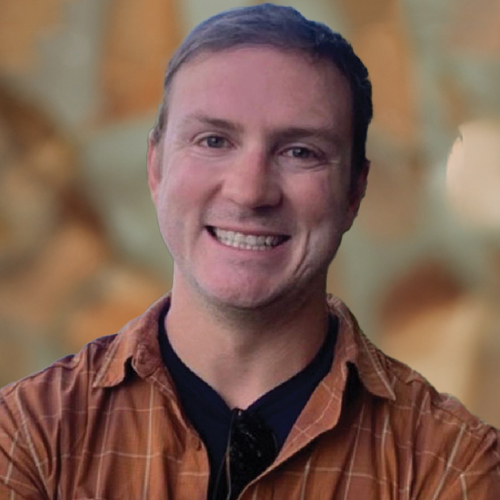
Mike Johnson

Mike Johnson, PhD

Chief Scientist

Mike leads Lynker Spatial's geospatial and hydrologic architecture. He spent over a decade supporting USGS and NOAA's Office of Water Prediction hydrographic and modeling efforts, and his peer-reviewed research on hydrologic modeling has been cited over 2,000 times. He is the technical lead behind the national hydrofabric that now underpins the NextGen National Water Model, FlowFabric, and the rest of the platform.


Arash Modaresi Rad

Arash Modaresi Rad, PhD

Hydraulics & Machine Learning

Arash develops the machine learning and hydraulic modeling frameworks behind Lynker Spatial's inundation and river intelligence. A data scientist contracting with NOAA's Office of Water Prediction, he leads the 3D Hydrofabric initiative: a comprehensive data model of all CONUS rivers that integrates survey data, DEM-derived information, machine-learned bathymetry, and remote sensing. He holds a Ph.D. in Computing (Data Science) and has published in Nature Sustainability, Science Advances, and Environmental Modelling & Software.

Ryan Spies

Ryan Spies

Forecasting, Operations & Client Success

Ryan leads operational forecasting at Lynker Spatial. A water resources scientist with a decade of public and private-sector experience, he specializes in hydrometeorological data analysis, statistical hydrology, and surface water modeling. His recent work spans automated flood warning systems, streamflow prediction, flood inundation mapping, drought risk analysis, and reservoir water supply optimization, with peer-reviewed research published in Water Resources Research, Journal of Hydrometeorology, and Journal of Hydrology.

Jim Coll

Jim Coll

Inundation Mapping, Cartography & Spatial Communication

Jim is a flood inundation mapping developer at Lynker Spatial, working closely with NOAA's Office of Water Prediction. His work sits at the intersection of GIScience and hydrology, with an emphasis on free and open-source software. His master's research on quantifying and visualizing the global trend in snow cover was published in ISPRS Journal of Photogrammetry and Remote Sensing, and his current Ph.D. dissertation at the University of Kansas uses small UAS (drones) to measure bathymetry and discharge at hyper-resolution scales.

The leadership above works directly on every engagement, supported by a team of hydrologists, data scientists, and geospatial engineers. You work with the people who build and maintain the platform, not with a layer of account managers.

← Back to Lynker Spatial